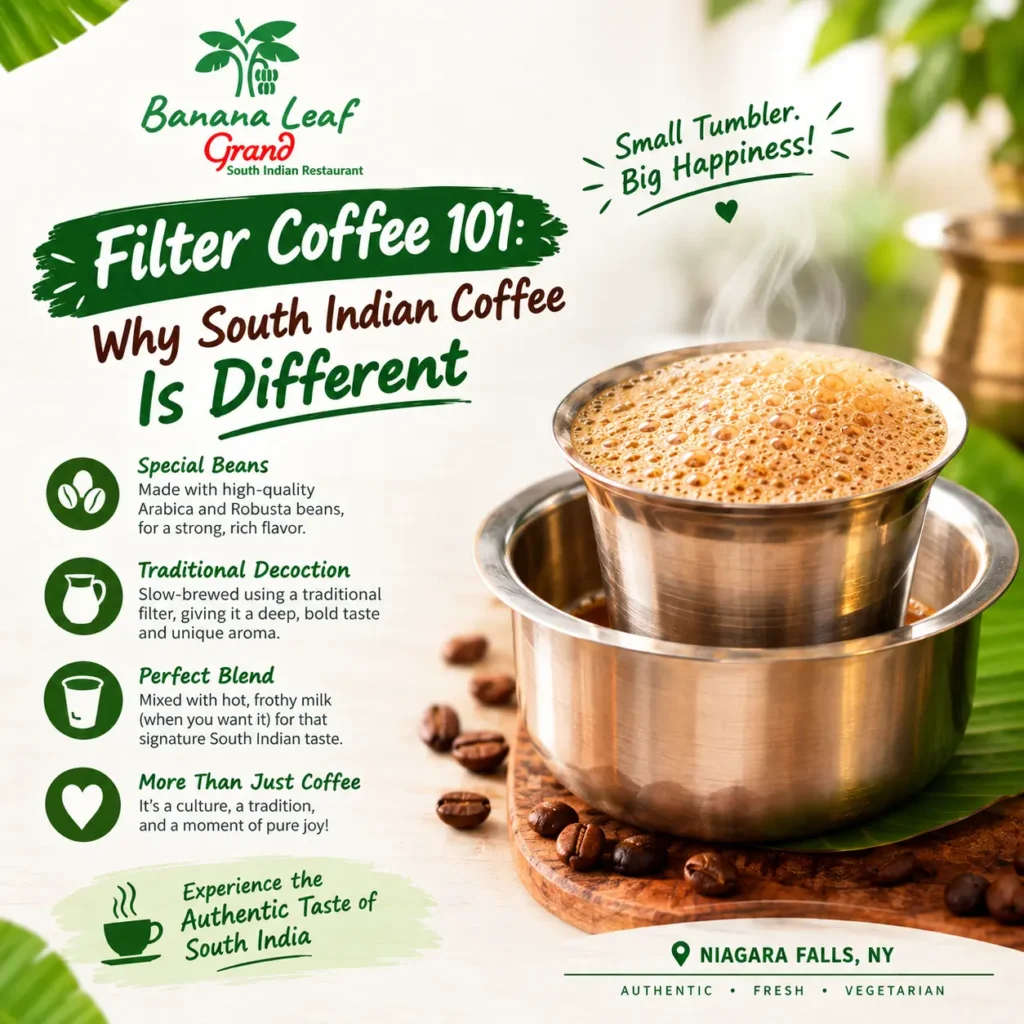
Filter Coffee 101: Why South Indian Coffee Is Different

If you’ve ever finished a South Indian meal and been handed a small steel tumbler of frothy, milky coffee instead of a regular cup, you’ve had your first introduction to filter coffee — and if you’ve had it, you probably understand why it has such a devoted following. This guide covers what filter coffee actually is, how it’s brewed, why it tastes so different from drip or espresso-based coffee, and what to expect the first time you order one.
What Is Filter Coffee?
Filter coffee — sometimes called Madras filter coffee or, in Tamil, “kaapi” — is a traditional South Indian coffee preparation made using a metal filtration device (not a paper filter) to slowly brew a strong, concentrated coffee decoction, which is then mixed with hot milk and sugar to taste.
It originated in South India, particularly Tamil Nadu and Karnataka, in the 17th–18th century and remains a daily ritual in South Indian households — often the first thing brewed in the morning and the last thing offered to guests before they leave.